
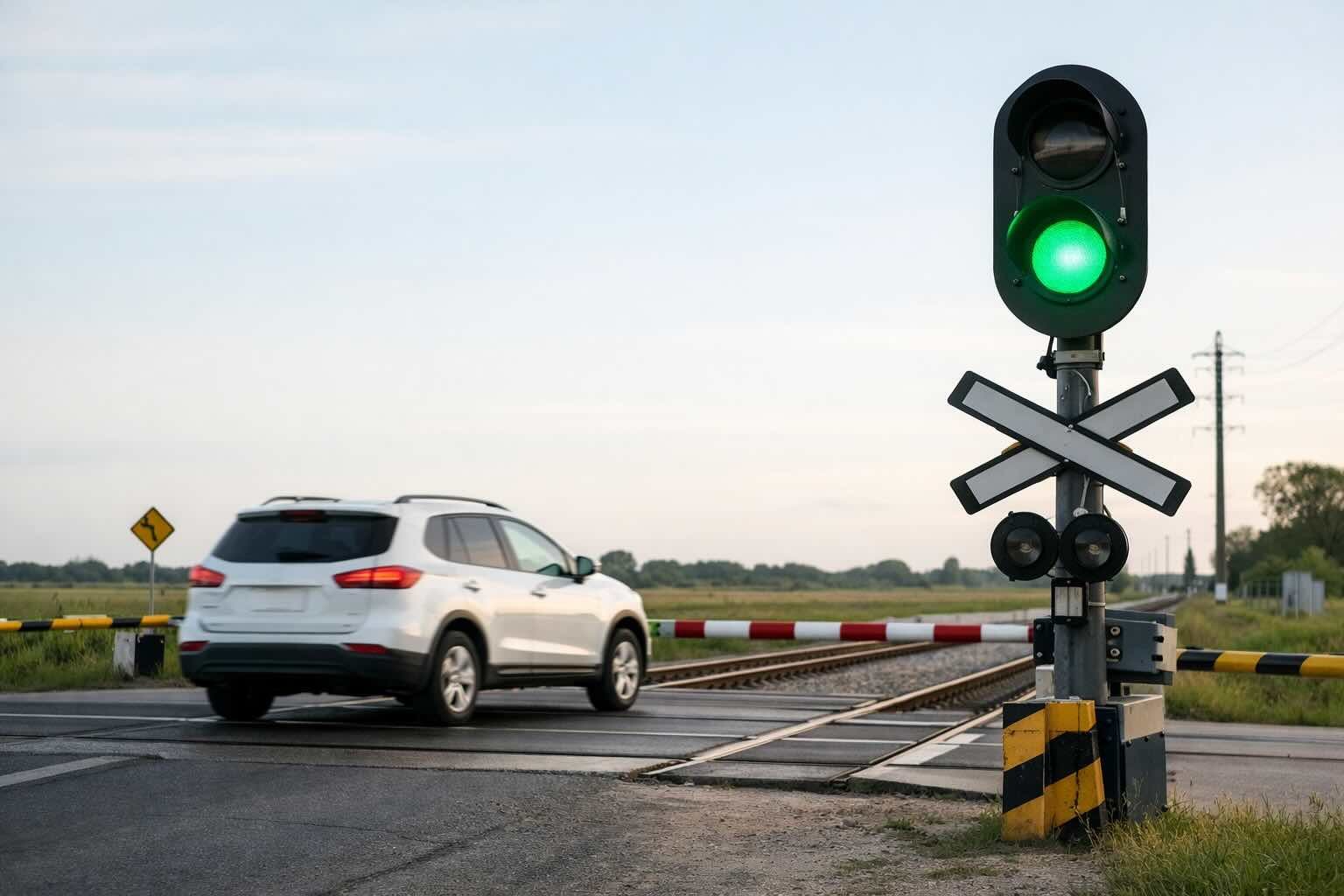
Our minds are surprisingly good at misreading signals.
- A racing heart during exercise feels like something is wrong, when in fact it’s your body getting stronger.
- Feeling awkward while learning something new makes us think we’re “bad at it”, when it’s actually the sign that learning is happening.
- Facing a fear feels terrifying, when in reality, it’s courage quietly being built.
These are classic signal errors—moments where discomfort is mistaken for danger.
And strangely, this same error shows up every time the stock market becomes volatile.
A falling market makes us uneasy. A sharp correction triggers anxiety. Red numbers feel like a warning sign. But what if—just like exercise or learning—this discomfort is not a signal to stop, but a signal that something important is working in your favour?
Volatility Is Uncomfortable — But Discomfort Isn’t the Enemy
Let’s be honest. Nobody enjoys volatility.
It tests patience, shakes confidence, and makes us question perfectly sensible plans. Even seasoned investors feel it. The difference is not who feels the discomfort—but who understands it.
As Howard Marks famously said:
“The biggest investing errors come not from factors that are informational or analytical, but from those that are psychological.”
Volatility feels like risk.
But in reality, it is the source of higher returns.
Just like sore muscles after a workout, volatility is uncomfortable because growth is happening—not because something is broken.
What the Stock Market Really Represents
Strip away the charts, tickers, and TV debates, and the stock market is simply this:
A collection of businesses.
Factories producing goods.
Banks lending money.
IT companies exporting services.
Consumer brands selling to millions of households.
Over the long run, stock market returns tend to align with the growth in corporate earnings, which in turn broadly tracks the country’s economic growth (GDP).
For India:
Long-term GDP growth is expected around ~7%
Add 4–6% inflation
That gives nominal growth of ~11–13%
A good mutual fund manager, through discipline and capital allocation, may add another 1–2% over long cycles.
Which means:
👉 Equity returns over long periods generally land in the 12–15% range.
Not smoothly.
Not every year.
But over time.
If Volatility Didn’t Exist, Returns Would Be Boring Too
Now comes the crucial question.
What if markets had no volatility at all?
Let’s look at the closest thing to “no volatility” we have:
5-year Government Securities (G-Secs).
Their yield today is roughly ~6%—considered a risk-free return.
And here’s the uncomfortable truth most investors never think about:
👉 If equities had no risk or volatility, their returns would also look like G-Sec returns.
No ups.
No downs.
No anxiety.
And no 12–15% wealth creation either.
Volatility is not a bug in the system.
It is the reason the system pays you more.
When Markets Fall, Something Is Quietly Working for You
This is where the signal error really hurts investors.
When markets fall:
SIPs buy more units
Long-term return potential improves
Future compounding quietly strengthens
Yet emotionally, it feels like the opposite.
The discomfort tricks us into thinking something is going wrong, when in reality, the mechanism that enables higher returns is doing its job.
Volatility doesn’t steal from long-term investors.
It penalises short-term reactions.
If your goals are meaningful—children’s education, retirement with dignity, financial freedom later in life—then volatility is not your enemy.
It is the price you pay for making those goals achievable.
A Gentle Reframe for This Market Dip
If you’re reading this while markets are already shaky—and your portfolio looks a little uncomfortable—you’re not alone.
When prices fall and headlines turn noisy, it’s natural to feel that familiar tightening in the stomach. That moment when the mind quietly asks:
“Is this danger… or is this discomfort?”
More often than not, it’s the latter.
This phase of volatility isn’t a sign that something has gone wrong.
It’s a sign that you’re participating in a game that rewards patience over reaction.
Volatility is not a signal to panic.
It’s the very reason long-term investors are compensated better than those who seek certainty.
What feels like fear while facing it is often bravery in the making.
And in investing—just like in life—bravery, when combined with time, compounds beautifully.
If market volatility ever makes you question whether you’re on the right path, remember—you don’t have to figure it out alone. Sometimes, a calm conversation is all it takes to turn confusion into clarity.
Join Our Mailing List
Once Weekly Webinar
Free Webinar Once Per Week
Our free webinar runs once per week and is available to anybody who wants to know more about getting started on the road to financial freedom.